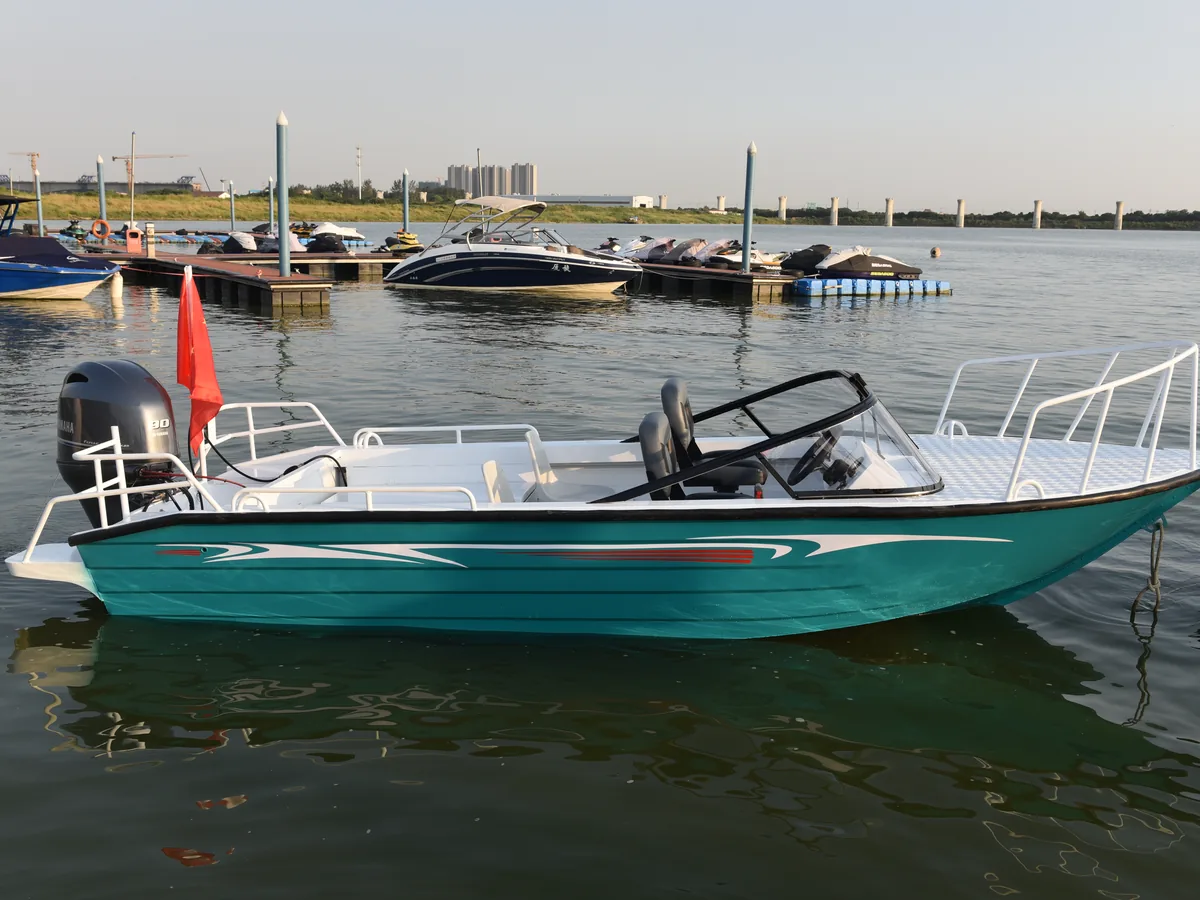
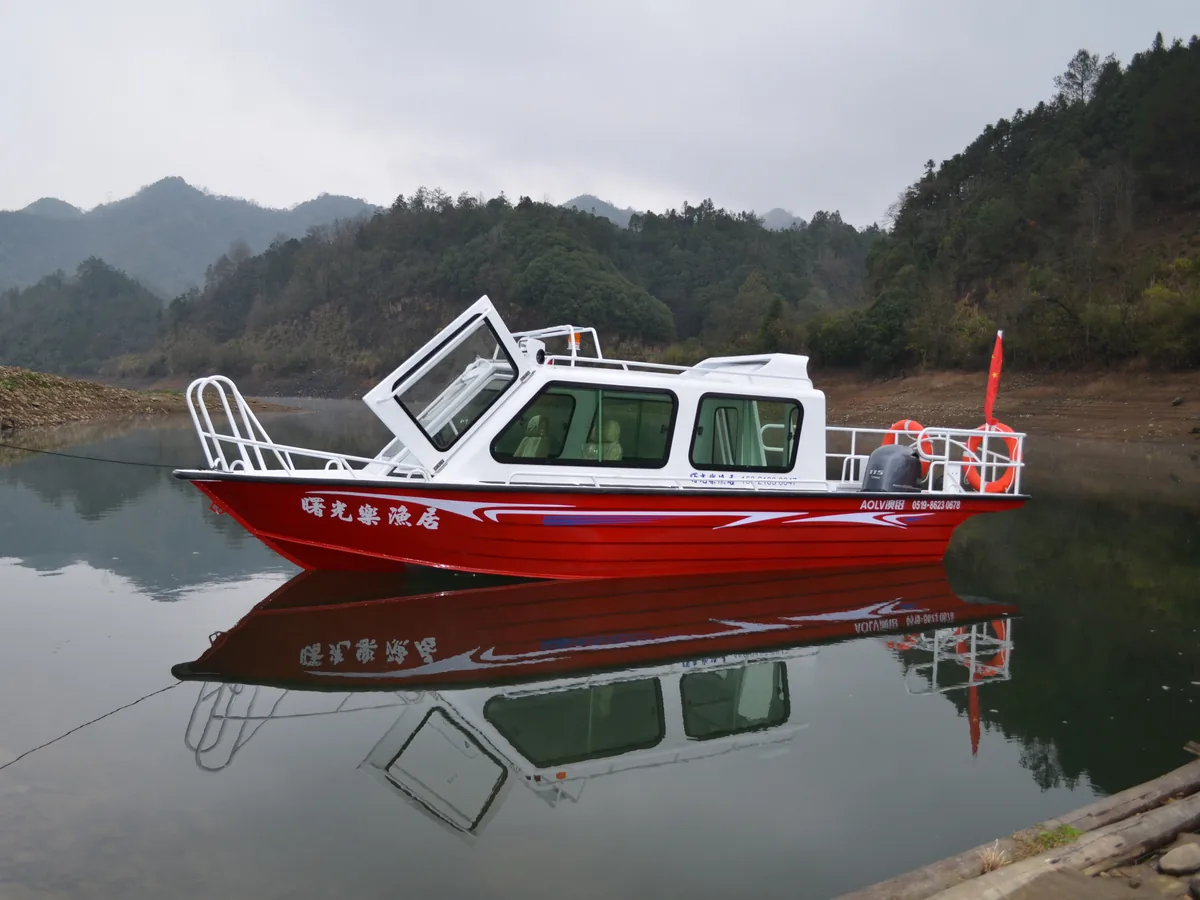
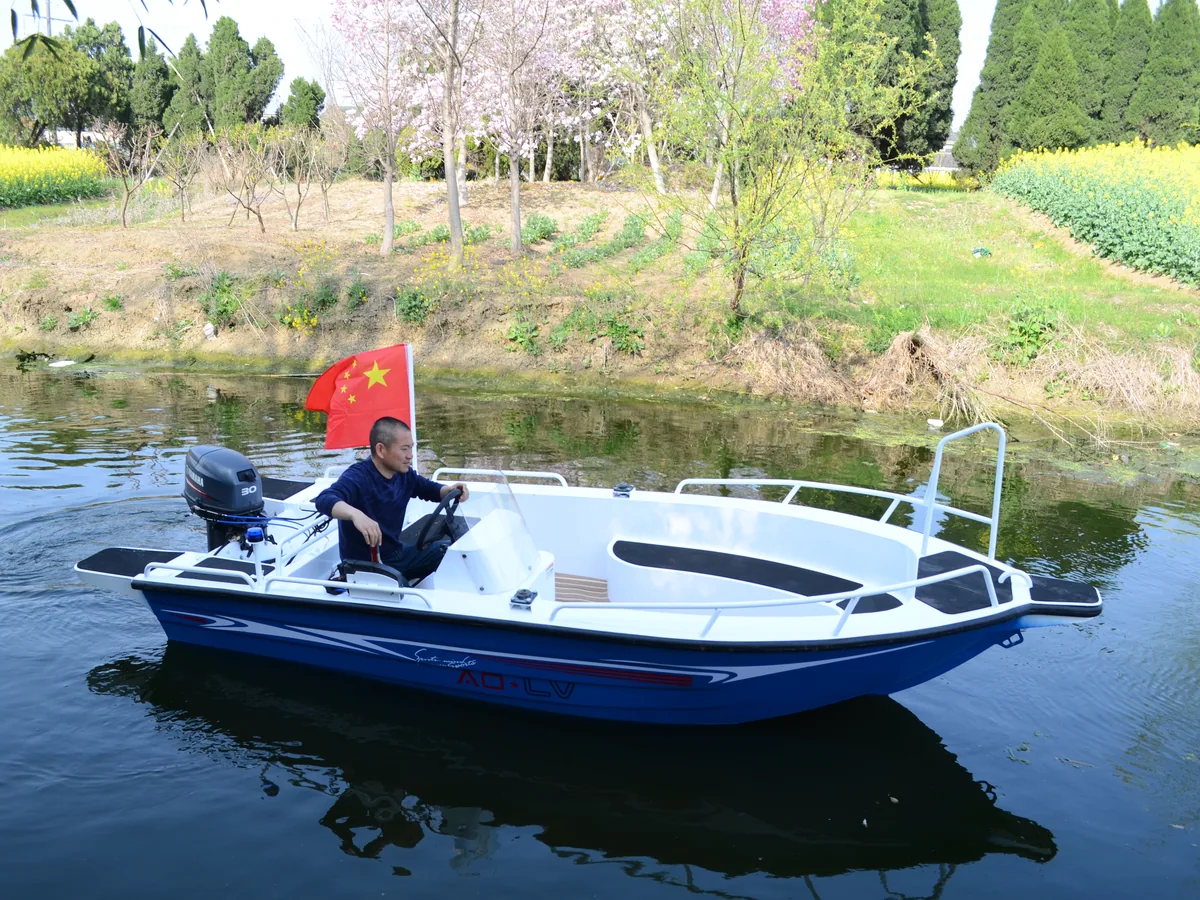
Why we build in 5083 aluminium (and when fibreglass still wins)
5083 is not the strongest aluminium and it is not the cheapest. It is the one that survives salt water, welding and a decade of being beaten against a quay — which is why almost every workboat in the Gulf is built from it.
Customers ask us two questions before they ask about price. The first is whether aluminium is strong enough. The second is whether it will corrode. Both are fair, and both have more interesting answers than yes or no.
What 5083 actually is
The number is an alloy designation: 5xxx series, magnesium as the main alloying element, 5083 being the grade with roughly 4.5% magnesium and a small amount of manganese. That magnesium content is what gives it its two useful properties. It work-hardens rather than losing strength when it is bent, and it forms a thin, self-healing oxide layer that stops corrosion spreading through the plate.
It is not the strongest aluminium available. 6082 is stronger in the heat-treated condition, and 7075 is stronger again. But both of those lose strength in the heat-affected zone around a weld, which is exactly where a boat is joined together. A welded 5083 hull keeps most of its parent-metal strength across the weld. A welded 6082 hull does not.
Why the hull is a thickness decision, not an alloy decision
- 3 mm is tender and skiff territory. Light, cheap, and dentable with a knee.
- 4–5 mm covers most boats up to 9 m. This is where our fishing and utility hulls sit.
- 6 mm is for offshore work and anything that will be grounded deliberately.
- 8 mm is commercial: crew boats, barges, anything with a crane on it.
Doubling the thickness does not double the strength — it roughly quadruples the stiffness — but it also adds weight that has to be pushed by an engine. That trade is the whole design problem, and it is why we build the same hull shape in two thicknesses for two different customers.
The corrosion question
Aluminium does not rust, but it does corrode, and the mechanism is different: galvanic corrosion when it is in contact with a dissimilar metal in seawater, and pitting when it is starved of oxygen under paint or debris. Both are engineering problems rather than material problems. Isolate stainless fittings with nylon washers and sealant, keep sacrificial anodes on the hull, and do not paint over wet aluminium. A 5083 hull that is maintained this way will outlast a fibreglass hull that is maintained the same way.
Aluminium is not maintenance-free. It is maintenance-forgiving — it tells you early, and it can be repaired.
When fibreglass is the better answer
If you want a smooth, complex, one-piece shape with a glossy finish, fibreglass is cheaper and easier. If your boat is under 5 m and lives on a trailer, a moulded hull will be lighter and quieter. If you are building 200 identical hulls a year, a mould pays for itself.
But if you want a hull that can be repaired by a welder in any port, that can be modified when your job changes, that does not absorb water or delaminate, and that can be built to your layout rather than to a mould — aluminium is the material. Every fishing boat and landing craft we build is a version of that argument.